

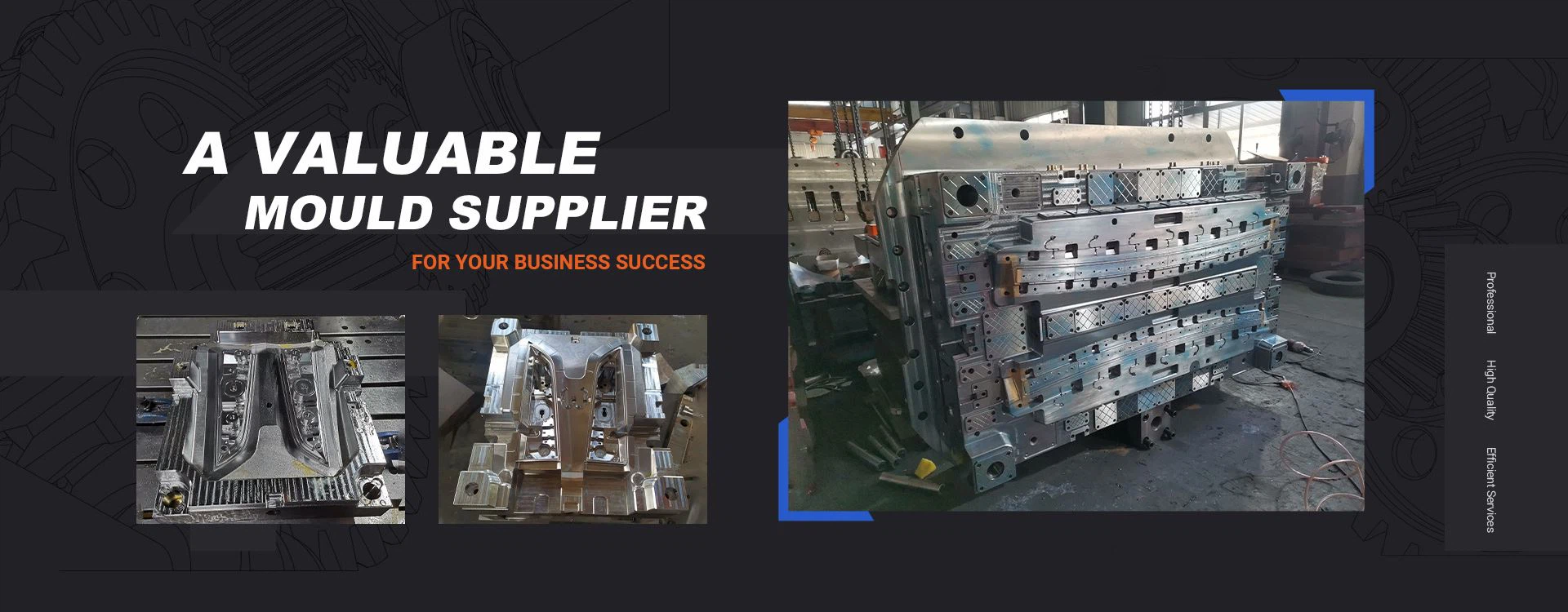
Mould Manufacturing Process
Mould manufacturing for plastic injection moulding is a complex process that involves several steps.


Mould Design Review
Before starting the manufacturing process, the mould design is thoroughly reviewed to ensure its accuracy and feasibility. This review involves checking dimensions, tolerances, materials, parting line, gating, cooling channels, ejection system, and other critical features. Any necessary modifications or improvements are made at this stage.
Material Selection
Based on the mould design and requirements, suitable materials are selected for various components of the mould, such as the mould base, cavities, cores, inserts, and ejector system. Common mould materials include tool steels S50C, P20, 718, H13, S136, NAK80, 1.2738, 1.2344 and so on. The choice of material depends on factors like expected tool life, production volume, part material, and cost considerations.
Rough Machining
The mould manufacturing process typically starts with rough machining. Rough CNC machines are used to remove excess material from the mould base, cavities, cores, and other components. Rough machining helps achieve the basic shape and dimensions of the mould components.
Heat Treatment
After rough machining, heat treatment is performed on the mould components to enhance their hardness, strength, and wear resistance. This process involves heating the components to a specific temperature and then cooling them rapidly or slowly, depending on the desired properties. Common heat treatment processes include hardening, tempering, and nitriding.
Precision Machining
Once the mould components are heat-treated, precision machining is carried out to achieve the final dimensions, tolerances, and surface finish. It includes high-speed CNC milling, EDM, wire cutting, drilling, boring and grinding for details like parting surfaces, cooling channels, gate features, and ejection systems. Precision machining requires high accuracy and attention to detail.
Mould Assembly
After the individual mould components are machined, they are meticulously assembled to form the complete mould. This involves fitting the cavities, cores, inserts, sliders, cooling system components, ejection system, and other mould elements together. The assembly process ensures that all components align correctly and function smoothly.
Finishing and Polishing
Once the mould is assembled, it undergoes finishing and polishing processes to achieve the desired surface finish and texture. This step involves removing any remaining imperfections, burrs, and tool marks from the mould surfaces. It may include hand polishing, buffing, or using specialized tools for achieving specific textures or finishes required by the part design.
Inspection and Testing
The completed mould undergoes thorough inspection and testing to ensure its quality and functionality. This includes checking dimensions, tolerances, alignment, clearances, and other critical parameters. mould testing can also involve trial runs where the mould is used to produce sample parts to verify its performance and identify any issues that need to be addressed.
Delivery and Documentation
Once the mould passes all inspections and tests, it is ready for delivery to the customer. The mould is carefully packaged and transported to the designated location. Along with the mould, comprehensive documentation, including 2D drawings, 3D CAD files, bill of materials, maintenance guidelines, and other relevant information, is provided to the customer for future reference and maintenance.
Mould manufacturing for plastic injection moulding requires expertise, precision, and attention to detail. Working with our professional team can help ensure the successful production of high-quality moulds that meet the specific requirements of the plastic parts to be produced.