

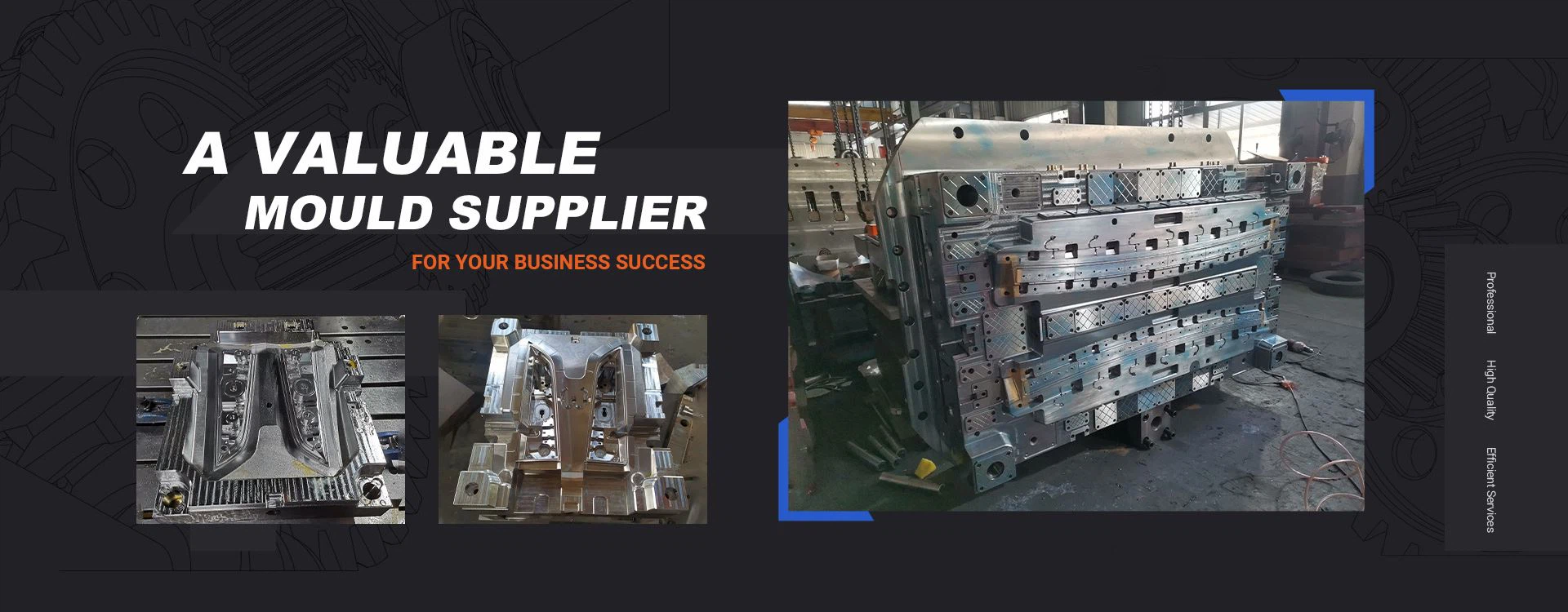


Commodity Mould
What is Commodity Mould
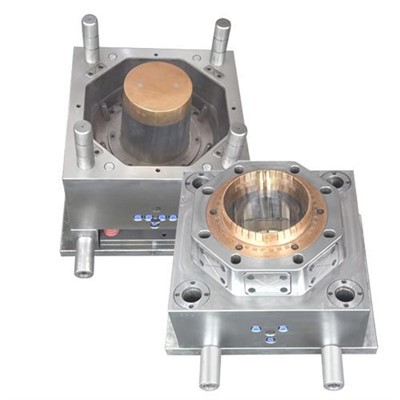
A commodity mold, also known as a commodity plastic mold, refers to a type of injection tool used for producing plastic parts that are considered commodity items. These are typically mass-produced products with high demand and standardized designs, often used in everyday consumer goods.
Highlights of Commodity Mould
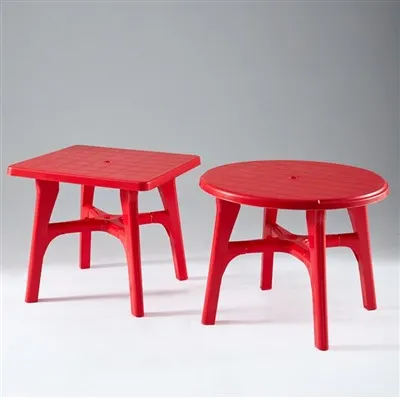
Commodity moulds are designed for efficiency and cost-effectiveness, aiming to produce large quantities of parts with consistent quality at a low per-unit cost. They are commonly used in industries such as packaging, household, kichenwares, consumer electronics, transportations and more. Examples of products produced using commodity molds include containers, buckets, cups, dishes, crates, basins, furnitures and various household items.
The design and construction of commodity molds prioritize factors such as rapid production cycles, durability, and ease of maintenance. They may utilize materials like hardened steel, depending on production volume and cost considerations. Additionally, commodity molds are often designed for high-speed injection molding processes to meet the demands of mass production.






Why Choose Us
One-stop solution
With rich experience in mould industry,we provide one-stop service from product design, mould manufacturing to final production.
Cost effectiveness
We strive to provide competitive price without compromising on quality, offering you value for your investment.
Innovation
Our team stays updated with the latest technologies and techniques in mould making, allowing us to provide innovative solutions that enhance your molding production processes.
On time delivery
We understand the importance of meeting deadlines. Our efficient processes enable us to deliver your mould on time, keeping your production schedule on track.
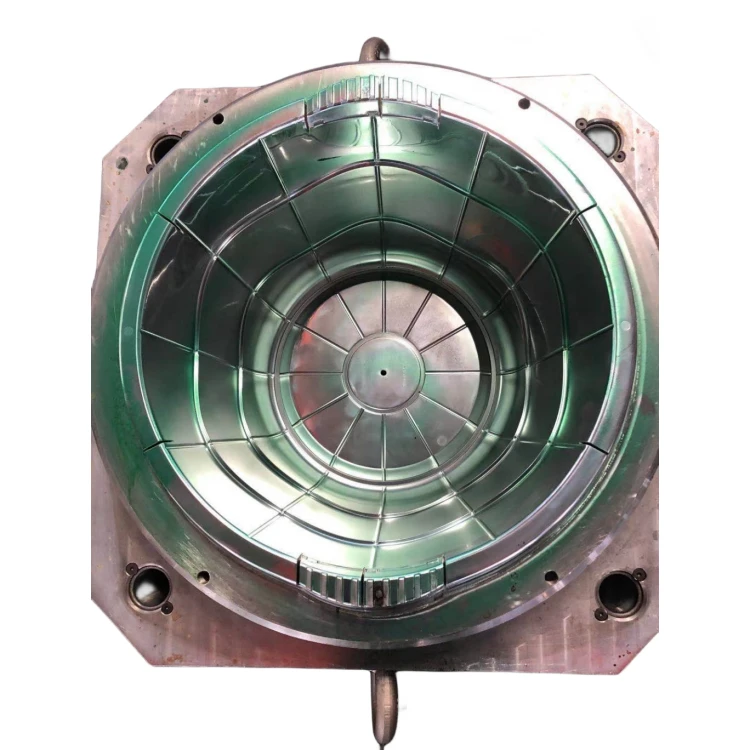
Plastic container mould
Now there are many kinds of plastic box molds on the market, plastic box types include: storage box, thin plastic fast-food box, microwave oven plastic box, most of the plastic boxes are made by food grade high temperature resistant PP, PE material, etc.
Plastic bucket mould
Bucket moulds are usually manufactured using high quality raw materials and cutting edge technology, and are available in different designs, shapes and sizes according to the specific requirements of the customer. Paint buckets, we made from 50 ml to 20L molds with handles, like 100 ml, 500 ml, 1 liter, 1 gallon, 5 liters, 10 liters.
Crate mould
We produce crate molds, such as fruit crate, vegetable crate, bottle crate, bread crate, thin-wall crate, folding crate, etc. Every customer wants a long service life, high speed crate mold. We usually add beryllium copper to the slider to shorten the cycle time.
Pallet mould
Such as single-side pallet mould, double-side pallet mould, two-way into pallet mould, four-way into pallet mould and so on.
Dustbin mould
We can design and manufacture household dustbin mold, medical dustbin mold, industrial dustbin mold. DIN1.2344 steel and copper beryllium is used in the core and cavity of the mold. The use of beryllium copper reduces cooling time , and increases production by 30-40%.
When you are approaching a Plastic Mould Factory for making a mould for a commodity product you can opt for a standard mould for the commodity product or choose to go in for a custom mould option to develop a commodity product that however differs from the standard ones in color, size, and appearance. Again, there are two important factors that you have to be clear about when you reach out to a mould maker.
●The purpose for which the product would be used. This would decide the type of mould that has to be made. This is because the purpose would be helpful in determining the type of thermo-setting plastic as well as the right type of mould to achieve the end product using that plastic.
●The number of units of the product you expect to produce using the mould. This is again an important factor as the number of units that would be produced using the mould would determine the type of mould that has to be produced. This is important to get cost-effective moulds as well as moulds that last.
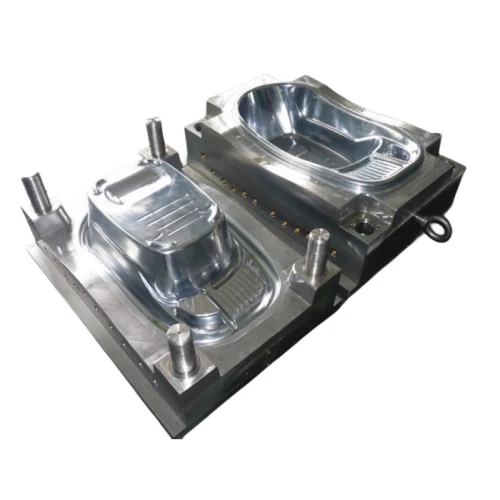
What Are The Main Components of Commodity Mold
The main components of a commodity mold include:
Cavity
The cavity is the part of the mold that creates the external shape of the product.
Core
The core is the part of the mold that creates the internal shape of the product.
Sprue
The sprue is the channel through which the molten plastic is introduced into the mold.
Runner
The runner is the channel that distributes the molten plastic from the sprue to the individual cavities.
Gate
The gate is the opening through which the molten plastic enters the cavity.
Ejector pins
The ejector pins are used to push the solidified product out of the mold after it has been formed.
Cooling channels
Cooling channels are incorporated into the mold to ensure that the plastic cools and solidifies uniformly and at the correct rate.
Alignment pins
Alignment pins are used to ensure that the two halves of the mold are properly aligned before and during the injection process.
Venting system
The venting system allows air to escape from the mold during the injection process, ensuring that the plastic fills the mold completely and uniformly.
What Materials Are Usually Used to Make Commodity Mold
Steel
Steel is a widely used material for commodity moulds due to its excellent strength and durability. Common steel types include P20, 718, and H13. P20 is a low-alloy tool steel that offers good toughness and machinability. 718 is a pre-hardened steel with higher hardness and wear resistance, suitable for high-production runs. H13 is a hot work tool steel known for its high heat resistance and excellent thermal conductivity.
Aluminum
Aluminum is another popular material for commodity moulds, particularly for low-volume production or rapid prototyping. It is lightweight, has good thermal conductivity, and allows for faster cooling cycles. However, aluminum may not be as durable as steel and may have limitations in terms of the number of cycles it can withstand.
Copper Alloys
Copper alloys, such as beryllium copper, are sometimes used for commodity moulds that require high thermal conductivity. These alloys are particularly suitable for applications where efficient heat transfer is crucial, such as in injection molding processes.
Stainless Steel
Stainless steel is known for its corrosion resistance and is often used for moulds that come into contact with corrosive materials or environments. It provides good dimensional stability and is suitable for producing products with high surface finish requirements.
What Products Can Commodity Molds Produce
Commodity molds are versatile and can produce a wide range of consumer products. Some common examples of products that can be produced using commodity molds include:
Plastic Containers: Commodity molds are frequently used to produce plastic containers of various sizes and shapes, such as food storage containers, beverage bottles, and cosmetic jars.
Caps And Closures: Commodity molds are suitable for manufacturing caps and closures for bottles, jars, and tubes, including screw caps, flip-top caps, pump dispensers, and spray nozzles.
Household Items: Many household items, such as buckets, hangers, storage bins, and utensils, can be efficiently produced using commodity molds.
Toys And Games: Commodity molds are commonly utilized to manufacture plastic toys, building blocks, puzzles, and board game components.
Electronic Components: Certain electronic components, such as connectors, cases, and covers, can be produced using commodity molds.
Automotive Parts: Simple automotive parts like interior trim components, knobs, and handles can be manufactured using commodity molds.
Medical Devices: Commodity molds can be used to produce basic medical devices, such as syringe components, vials, and pill organizers.
Packaging Components: Various packaging components, including blister packs, clamshell packaging, and trays, can be made using commodity molds.
Personal Care Products: Commodity molds are suitable for producing items like shampoo bottles, lotion dispensers, toothbrushes, and soap dishes.
Pet Products: Commodity molds can be used to manufacture pet bowls, chew toys, litter boxes, and other plastic pet supplies.

Material opening: Front mold material, rear mold material, insert material, row position material, and inclined top material;
Opening frame: Front mold frame, rear mold frame;
Opening thickness: Opening thickness of the front mold cavity, opening thickness of the rear mold cavity, and opening thickness of the parting line;
Copper male: Front mold copper male, rear mold copper male, parting line clear angle copper male;
Wire cutting: Insert parting line, copper male, inclined top pillow position;
Computer gong: Precision gong parting line, precision gong rear mold core;
Electric spark: Front mold coarse, copper male, male mold line clear angle, rear mold bone position, pillow position;
Drill holes, pinholes, and thimbles; Processing line position and line position pressure pole for the top needle hole and waterway hole of the mold;
Oblique top, double top needle, with top needle.
●Clear design and processing task
●Pro/e to make the product three-dimensional modeling
●Mold design
●Into the mold reference model
●Set the shrinkage rate
●Design blank workpiece
●Design parting surface
●Partition volume block
●Extract mold components
●Casting mold
●Open mold
●In CNC milling processing
●Processing billet and determination of the cutter point
●Planning the surface grooving rough machining tool path, reserved "0.3"
●Workpiece parameter setting
●Surface grooving rough machining solid processing simulation
●Planning the surface grooving machining tool path, the mold machining in place
●Planning the surface parallel rough machining tool path
●Plan the tool path for parallel finishing of surface
●Plan the tool path for finishing of contour contour of surface.

Mold Testing Process
♂Understand the relevant information of the mold:
It is best to obtain the design drawing of the mold, analyze it in detail, and invite the mold technician to participate in the mold trial work.
♂First check the mechanical coordination action on the workbench:
Attention should be paid to whether there is scratching, missing parts and loosening, whether the action of the mold to the skateboard is true, whether the water channel and the gas pipe joint are leaking, and if the opening of the mold is limited, it should also be marked on the mold. If the above action can be done before hanging the mold, it can avoid the waste of time when the problem is found when hanging the mold, and then the waste of time occurs when disassembling the mold.
♂When determining the appropriate action of each part of the mold, it is necessary to choose the appropriate mold injection machine, and attention should be paid to the selection
(a) Injection capacity
(b) Width of the guide bar
(c) Maximum opening range
(d) Whether the accessories are complete. After everything is confirmed that there is no problem, the next step is to hang the mold. When hanging, attention should be paid to not remove the hook before locking all the clamping plates and opening the mold, so as to avoid loosening or breaking the clamping plates and causing the mold to fall.
After the mold is installed, the mechanical action of each part of the mold should be carefully checked, such as whether the action of the skateboard, thimble, tooth withdrawal structure and limit switch is correct. And pay attention to whether the injector nozzle and the feed port are aligned. The next step is to pay attention to the mold closing action. At this time, the mold closing pressure should be lowered, and pay attention to whether there are any irregular movements and abnormal noises in the manual and low speed mold closing action.
♂Increase mold temperature:
According to the performance of the raw materials used in the finished product and the size of the mold, the appropriate mold temperature control machine is selected to raise the temperature of the mold to the temperature required for production.
After the mold temperature increases, it is necessary to check the action of each part again, because the steel may cause the phenomenon of clamping after thermal expansion, so it is necessary to pay attention to the sliding of each part to avoid strain and vibration.
♂If the experimental planning rule is not implemented in the factory, we suggest that only one condition can be adjusted at a time when adjusting the test conditions in order to distinguish the impact of a single condition change on the finished product.
♂Depending on the raw materials, do moderate baking of the original materials used.
♂The same raw materials are used as far as possible for the test mold and future mass production.
♂Do not completely test the mold with secondary materials, if there is a color demand, you can arrange color testing together.
♂Internal stress and other problems often affect the secondary processing, should be tested after the stability of the finished product after the secondary processing mold in the slow close, to adjust the closing pressure, and action several times, to see whether there is a mold pressure inequality, so as to avoid the finished product burring and mold deformation.
After checking the above steps, lower the closing speed and closing pressure, set the safety buckle and ejection stroke, and then adjust the normal closing speed and closing speed. If the limit switch with the maximum stroke is involved, the die opening stroke should be adjusted slightly shorter, and the high-speed die opening action should be cut off before the maximum die opening stroke. This is due to the fact that during the whole opening stroke of the mold, the high-speed motion stroke is longer than the low-speed one. The mechanical ejector rod on the plastic machine must also be adjusted after the full speed mold opening action, so as to avoid deformation of the thimble plate or the stripping plate.
Please check the following again before making the first mold injection:
(a) Whether the feeding trip is too long or insufficient.
(b) Whether the pressure is too high or too low.
(c) Whether the filling speed is too fast or too slow.
(d) Whether the processing cycle is too long or too short. To prevent the finished product short shot, fracture, deformation, raw edge and even damage to the mold.