

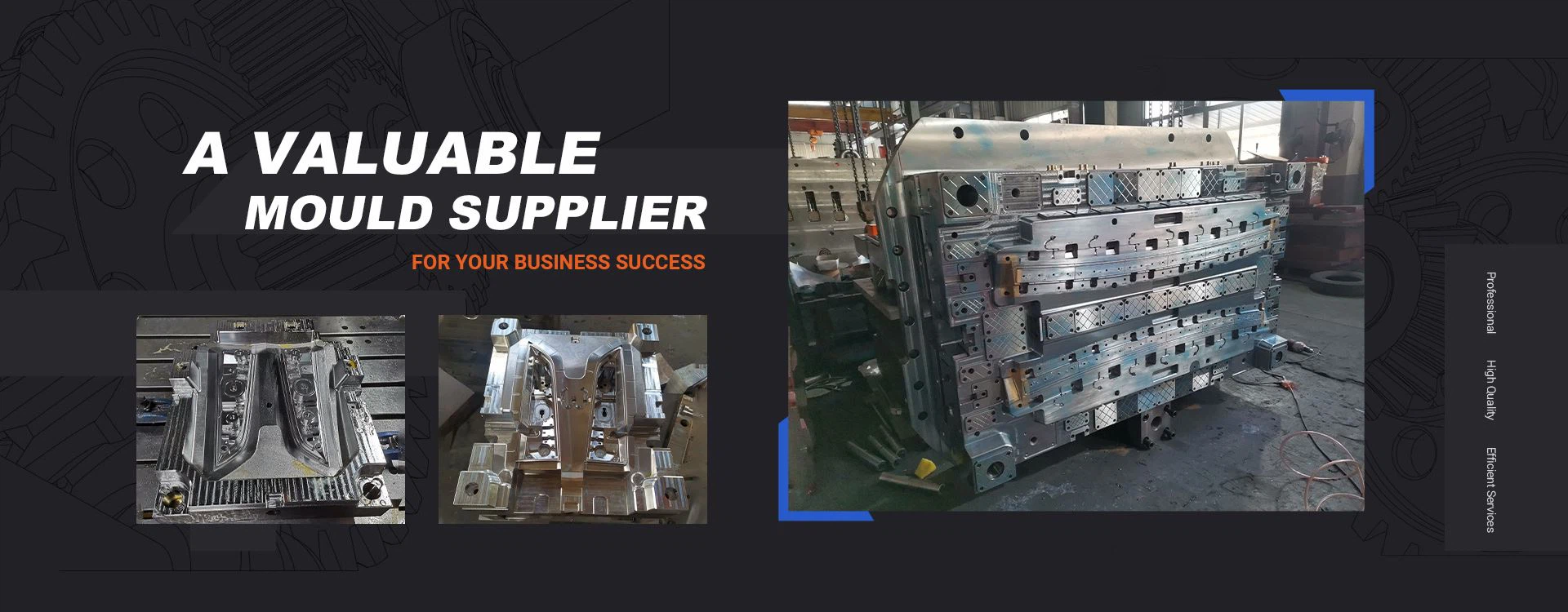


Home Appliance Mould
What is Home Appliance Mould
Home appliance mould also referred to as "electrical appliance mould," pertains to the production of plastic components for household electric appliances. These moulds encompass both the interior plastic parts and the external housing or casing.In the precision injection molding manufacturing of major appliances, a high-precision home appliance plastic injection mould is indispensable. The home appliance industry necessitates tailor-made plastic injection moulds suitable for insert molding, overmolding, or thin-wall molded products.
Highlights of Home Appliance Mould
Generally, the requirements for plastic injection moulds used in home appliances are indeed high. It is very important in quality, durability, and performance for consumer products.
Precision and Accuracy
Home appliances often have intricate designs and precise specifications. Therefore, the molds used to produce their components must meet strict dimensional accuracy requirements to ensure proper fit and functionality.
Aesthetic Standards
Home appliances are visible and often part of the decor in households. As such, the surface finish of molded parts must meet high aesthetic standards to maintain the overall visual appeal of the product.
Durability and Longevity
Home appliances are expected to have a long lifespan, so the molds used to manufacture their components must be durable and capable of withstanding the high pressures and temperatures of the injection molding process over numerous production cycles.
Consistency and Reliability
Home appliance manufacturers demand consistency and reliability in their production processes to maintain product quality and brand reputation. Injection molds must produce parts with minimal variation and defects to meet these requirements.
Efficiency and Cost-Effectiveness
While meeting high quality standards, injection molds for home appliances must also be designed for efficiency and cost-effectiveness to ensure competitive pricing and profitability for manufacturers.


Why Choose Us
One-stop solution
With rich experience in mould industry,we provide one-stop service from product design, mould manufacturing to final production.
Cost effectiveness
We strive to provide competitive price without compromising on quality, offering you value for your investment.
Innovation
Our team stays updated with the latest technologies and techniques in mould making, allowing us to provide innovative solutions that enhance your molding production processes.
On time delivery
We understand the importance of meeting deadlines. Our efficient processes enable us to deliver your mould on time, keeping your production schedule on track.

Injection molding products are used in various categories of household appliances. Some common categories include:
Kitchen Appliances
Injection molded parts are found in blenders, coffee makers, toasters, food processors, and microwave ovens. Materials used include heat-resistant thermoplastics like ABS, PC/ABS blends, PC, PA, etc.
Cleaning Appliances
Vacuum cleaners, washing machines, and dishwashers utilize injection molded components. Materials such as impact-resistant ABS, PP, and TPO are commonly used.
Home Electronics
TV sets, audio systems, and gaming consoles incorporate injection molded parts. Materials range from ABS and PC/ABS blends for structural components to PC or PMMA for transparent panels.
Personal Care Devices
Hair dryers, electric shavers, and toothbrushes feature injection molded parts. Materials like ABS, PC/ABS, and TPU are used for durability and aesthetic appeal.
In home appliance manufacturing, precision injection molding has become a crucial technique. It ensures that products have both precise dimensions and consistent repeatability in weight. By leveraging this advanced molding technique, manufacturers can achieve high-pressure, high-speed injections.
Open-Loop Vs. Closed-Loop Control In Precision Molding
One of the standout features of precision injection molding is its control mechanism. Typically, the process can be governed by either an open-loop or a closed-loop control system. This flexibility allows for meticulous adjustments to the injection molding parameters, ensuring the highest degree of accuracy throughout the process.
Demands On Mold Precision And The Rise Of Compact Machines
Precision in injection molding for home appliances isn't just about the process; it extends to the tools used. The molds, in particular, need to meet stringent accuracy standards. Recognizing this demand, the market has seen a growing popularity for compact precision injection molding machines. These smaller machines, while being space-efficient, do not compromise on the quality or precision of the products they produce.

Design Tips of Home Appliances Mould
Wall Thickness Design
The wall thickness of a plastic part is primarily influenced by its external dimensions and materials. However, in the design of plastic products, maintaining a uniform wall thickness is a fundamental principle. Deviations in wall thickness can lead to defects in the appearance of plastic parts, including shrinkage, depressions, deformations, and internal stress, ultimately resulting in cracks.
If the wall thickness is too thin, it can increase the resistance to the flow of molten plastic, impede material flow in the cavity, making it challenging to fill the material. This results in unfilled areas and compromised strength in the plastic parts.
Conversely, excessively thick wall thickness is not advantageous. It can lead to issues such as bubbles, shrinkage, depressions, and deformations in the product's appearance. Moreover, thicker products are heavier, increasing the overall cost. Additionally, thicker wall thickness prolongs molding time due to extended pressure holding and cooling times, resulting in lower production efficiency. However, when strength requires local thickness, a gradual transition between thick and thin is necessary to prevent abrupt changes.
Design of Fillet and Draft Angle
The stress concentration at sharp corners in injection-molded cases can result in brittle failures. Eliminating sharp corners reduces stress concentration, reinforcing rib strength, and enhances the product's ability to withstand external impact. In the design of home appliances, outer arc corners should be maximized, avoiding excessive rounding transitions, typically maintaining an arc size range between 0.3mm and 0.8mm.
Drafting is crucial for smooth demolding during mold production. The draft angle depends on factors such as part size, wall thickness, shrinkage, and mold cavity surface roughness. Controlling the demoulding angle between 20' and 1°30' prevents difficulties in removing plastic parts due to shrinkage during continuous cavity shrinkage.
Reinforcing Rib Design
Reinforcing ribs enhance the structural strength of plastic parts, reducing the likelihood of warping, plastic consumption, product weight, and production costs without increasing wall thickness. In rib design, strict control of rib position, height, and even distribution helps avoid cold shrinkage at the rib bottom. Maintaining consistency between rib distribution and melt filling direction aids in the injection mold's opening and closing. Adopting an arc transition for reinforcing ribs and rounding corners at the bottom of ribs improves melt fluidity and reduces stress concentration. Typically, reinforcing ribs are around 50% to 70% of the wall thickness, with the R angle at the bottom being approximately 1/8 of the wall thickness.

In terms of materials, the application of new plastic materials is an important innovation in the manufacture of appliance molds. New plastic materials with high strength, high temperature resistance and excellent flame retardant properties are widely used in the manufacture of home appliance molds to meet the higher requirements of modern home appliance products for performance and safety. These materials not only improve the durability of the products, but also make the mold manufacturing process more flexible, better adapted to different design and functional requirements.
Advanced manufacturing technologies are also widely used in the appliance mold industry. The introduction of technologies such as CNC machining, 3D printing, and mold runner optimization have made the mold manufacturing process more precise and efficient. Through these technological innovations, manufacturers are able to design and manufacture high-quality appliance molds more quickly, increase productivity and reduce costs.
The concept of environmental protection and sustainable development has also driven the innovation of appliance mold materials and technologies. The use of biodegradable materials not only helps to reduce environmental impact, but also meets the growing consumer interest in sustainable products. Some manufacturers are introducing recycled materials into mold manufacturing to reduce resource consumption and enhance the sustainability of the industry as a whole.
In the future, we can expect to see more innovations based on artificial intelligence and digital technology, making mold design and manufacturing smarter and more accurate. This will provide manufacturers with more flexibility and bring consumers more advanced and intelligent home appliances.
Material Selection
The success of the plastic injection molding process relies heavily on selecting the right material for the intended application. Here are the steps involved in material selection:
Identify the Requirements: Understand the specific requirements of the product, such as mechanical strength, chemical resistance, and environmental factors.
Choose the Plastic Type: Select the appropriate plastic material based on properties like flexibility, rigidity, transparency, or heat resistance. Common types include polyethylene, polystyrene, polypropylene, and ABS.
Consider Fillers and Additives: Determine if the material needs any additional fillers or additives to enhance its properties or reduce costs.
Material Testing: Perform material testing to evaluate its performance under different conditions, ensuring it meets the required specifications.
Mold Design
The mold design stage is crucial in ensuring the production of high-quality plastic parts. Here are the steps involved in mold design:
Product Analysis: Analyze the product design and specifications to determine the mold's requirements, including parting line, gating, and ejection mechanisms.
Mold Material Selection: Choose the appropriate mold material based on factors such as expected production volume, part complexity, and cost considerations.
Mold Cavity Design: Design the mold cavity to match the desired shape of the final product accurately. Consider factors like draft angles, wall thickness, and surface finishes.
Mold Tooling: Create the mold tooling, which includes the mold base, core, and cavity inserts. Use precision machining techniques for optimal mold accuracy.
Injection molding
The injection stage involves injecting the molten plastic material into the mold cavity under high pressure. Here are the steps involved in the injection process:
Clamping: Close the mold tightly to ensure precise part replication and prevent material leakage during injection.
Injection Unit: The plastic material is melted and homogenized in the injection unit, consisting of a heated barrel, screw, and nozzle.
Injection Speed and Pressure: Control the injection speed and pressure to fill the mold cavity adequately without causing defects like air traps or sink marks.
Cooling Time: Allow sufficient time for the plastic material to cool and solidify inside the mold. Cooling time depends on factors such as part thickness and material properties.
Why Injection Moulding for Appliances
Design accuracy
Due to the high-pressure injection of plastic under very controlled parameters while moulding parts, the components are identical and nearly perfect as per the mould design, which is very difficult to achieve with other methods.
Precision
Injection Moulding is the most reliable process to produce highly precise identical parts, without any deviation in design.
Versatility
One can get desired designs of plastic parts made with Injection Moulding. Once the design is specified, the moulds are prepared accordingly, allowing to produce appliance parts as per requirement.
Volume
This is the preferred method for manufacturing plastic moulded parts in large volumes that too in lesser time.
Cost
Once the mould is made, the Injection Moulding process proves to be the most efficient cost-saving way to produce large quantities, repeatedly.
Variation
With Injection Moulding, customization of the plastic parts is possible by adding fillers or color batches, as per the design needs.
In-mold decoration (IMD) is a revolutionary technique in the home appliance production. This method involves placing a specially designed decorative plastic film within the mold before the injection molding process begins.
The Process And Advantages Of In-Mold Decoration
Once the molding process starts, the heat causes the decorative film to deform and adhere seamlessly to the surface of the molded part. A product that’s not only visually appealing and sturdy but also eliminates the need for post-molding decoration. This dual benefit of aesthetics and efficiency makes in-mold decoration a preferred choice for many manufacturers in the home appliance molding industry.
The Demand For Plastic Molds In Home Appliances
Typically, the demand for plastic molds in the production of home appliances is immense. For instance, a refrigerator or a fully automatic washing machine might require over 100 different plastic molds. An air conditioner might need more than 20, while a color television could demand between 50 to 70 molds.

Development Trend of Household Appliances Mould Industry
First, the appliance mold industry is undergoing digital transformation. With the continuous development of industrial Internet and digital manufacturing technology, the mold manufacturing process will become more intelligent and digital. The application of digital technology will improve production efficiency, reduce costs, and provide more innovative possibilities for mold design and manufacturing. From mold design to production monitoring, digital technology will become an important driving force for the competitiveness of the appliance mold industry.
Secondly, environmental protection and sustainable development has become an important direction for the appliance mold industry. As people's awareness of environmental protection increases, mold manufacturers will pay more attention to the use of environmentally friendly materials, reduce energy consumption, and implement sustainable production processes. The wide application of biodegradable materials and the adoption of recycled materials will push the appliance mold industry toward a more environmentally friendly and sustainable direction.
Third, the rise of the smart home will prompt continuous innovation in the appliance mold industry. With the rapid popularization of smart home products, home appliance molds need to adapt to more diverse and complex product demand. This involves innovations in the mold's structural design, material selection and manufacturing process to meet the high requirements of smart home products for precision, interconnectivity and safety.
Increased demand for customization is also a major development trend in the home appliance mold industry. Consumers' rising demand for personalized and customized products means that mold manufacturers need to be more flexible to meet the specific needs of different customers. Customized production will drive the appliance mold industry to become more flexible, innovative and increase customer satisfaction.