

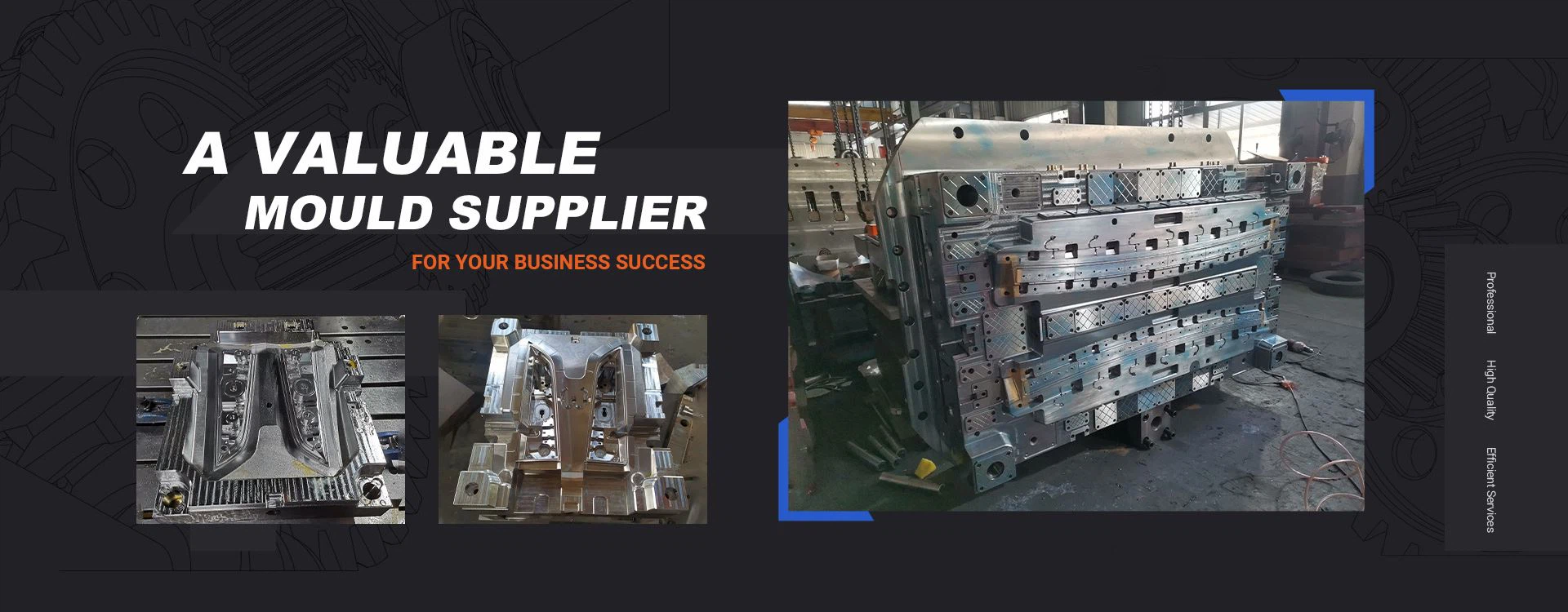


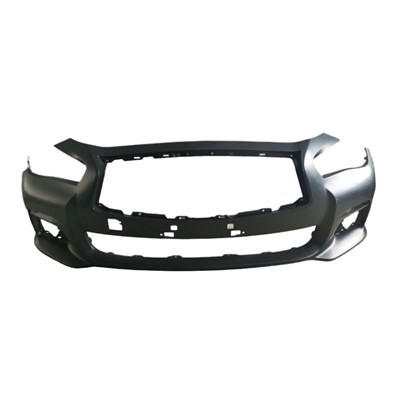
Bumper Mould
What is Bumper Mould
A bumper mould is an injection tool used to shape and form the bumpers of vehicles. Bumpers are typically made from PP+EPDM, and the mould is used to give the bumper its desired shape and features. Bumper moulds are usually made from durable steel material (S50C, P20, 718), as they need to be able to withstand the high pressures and temperatures involved in the injection moulding process. Bumper mould is usually with big size, which requires enough big machines for tooling.
Highlights of Bumper Mould
Quality and Appearance
The quality and appearance of car bumpers is of great importance as they are a prominent feature of a vehicle's exterior. To meet the required standards, bumpers must have a smooth surface, consistent color, appropriate weight, and the correct size and shape. Ensuring that these standards are met is essential for creating a safe and reliable vehicle.
Light-weight
Nowadays, the automotive industry has been trending towards more light-weight parts. The large car bumper is one of the auto parts that is getting light-weight than before. However, the bumpers are still big in size, so they need to be made with large injection machines which have large space for mold. Bigger mold with smaller clamping force becomes a requirement that manufacturers need while producing car bumper. Due to the shape and size, bumper production requires an injection molding machine that features wide platen design. Therefore, many OEMs prefer buying large injection molding equipment with small clamping forces or exchanging smaller screw/injection units, which could save money.
Energy saving
Injection molding machines typically consume a significant amount of energy, particularly when they are operating at full capacity. Energy-efficient injection molding machines can help to reduce energy consumption and lower operating costs. Reducing energy consumption can also have a positive impact on the environment. Our uses a servo energy saving system instead of a traditional motor system, which could save 50% of energy. And with an electric charging system, we could save an extra 25% on energy. Moreover, with special barrel heating elements.




Why Choose Us
One-stop solution
With rich experience in mould industry,we provide one-stop service from product design, mould manufacturing to final production.
Cost Effectiveness
We strive to provide competitive price without compromising on quality, offering you value for your investment.
Innovation
Our team stays updated with the latest technologies and techniques in mould making, allowing us to provide innovative solutions that enhance your molding production processes.
On-time Delivery
We understand the importance of meeting deadlines. Our efficient processes enable us to deliver your mould on time, keeping your production schedule on track.

The manufacturing process for bumper mould can vary depending on the specific requirements of the mould and the materials being used. In general, however, the process follows a similar set of steps:
Design: The first step in the manufacturing process is to design the car bumper mould. This typically involves creating a 3D model of the bumper, and then creating a detailed 3D mould, including all of its features and structures. Sometimes, it needs to make 2D mould design drawing for customer to approve. To assure the best mould design solution, we usually need to do moldflow analysis.
Machining: Once the design is complete, the next step is to machine the mould. This typically involves cutting the material to the desired shape and size using equipment such as CNC milling machines, grinding machines, and EDM (electrical discharge machining) equipment. The machining process can be quite complex and time-consuming, as it requires precise measurements and attention to detail.
Assembling: After the individual parts of the mould have been machined, the next step is to assemble them. This typically involves fitting the parts together and securing them with bolts or other fasteners. The mould may also need to be polished or surface treated at this stage to improve its appearance or performance.
Testing: Before the automotive bumper mould is ready for use, it must be thoroughly tested to ensure that it is functioning properly. This may involve running test runs of the moulding process to see how the mould performs and making any necessary adjustments.
Maintenance: Bumper moulds require regular maintenance to ensure that they continue to function properly. This may involve cleaning the mould and replacing worn or damaged parts as needed.
Bumper Features
The automotive bumper material is required to have good rigidity over a wide temperature range, good impact resistance, good dimensional stability, good solvent resistance and good coating performance. Commonly used >PP+EPDM-T20.
The bumper is composed of a buffer beam, an (energy absorbing) energy absorbing foam, a body and a connecting bracket, wherein the energy absorber is in the form of PP foaming.
Bumper body, upper and lower grille, tow hook cover, lower support guard material adopts PP+EPDM-T20: PP is the basic material of bumper, EPDM can improve the elasticity of bumper, and T20 means material Plus 20% talcum powder, mainly to improve the rigidity of the bumper.
The energy absorbing block generally adopts an EPP or a PP foaming structure to absorb the impact energy. The front/rear cushioning beam body material is made of cold-rolled high-strength structural steel B340/590DP, and the buffer beam bracket is made of B180P2 (relative to the material of the beam body, the material is low in strength but cheap), mainly to meet the requirements of European regulations. Front/rear collision requirements.
The bracket material on both sides adopts PA66+GF30%, and the material has the characteristics of good toughness and hard surface. The lower support guard mainly serves as a pedestrian protection function, and supports and protects the lower leg during collision, and plays a certain aesthetic effect.
The above-mentioned materials generally have an environmentally friendly effect of recycling and recycling, which can reduce environmental pollution. The structure of the bumper system is mainly composed of shape, wall thickness, demoulding angle, ribs, support surface, rounded corners, holes and so on.
The automotive bumper mask and the beam are large thin-walled injection molded parts, and the mask is also an appearance part. The material is required to have good fluidity, and has high precision of parts and ultraviolet stability. Generally, modified polypropylene is used. PP+EPDM) material.
In the structural design, the geometric shape and the forming method should be designed. The mold parting surface should satisfy the forming process as well, and the parting line should be placed on the non-appearing surface as much as possible.
In the design of plastic parts, in order to avoid stress concentration at the corners, a circular arc transition should be used, which is very beneficial for the manufacturing life of the mold.
Generally, the joints of the plastic parts should be. Fillets of 5-1mm, and some rounded corners should be used at the corners to reduce stress and ensure consistent wall thickness.
Wall thickness
the wall thickness of the part is generally uniform, otherwise it will cause uneven shrinkage due to different curing or cooling speeds, resulting in internal force, resulting in warpage or shrinkage of the part.
Demoulding angle
Plastic parts must take into account the angle of release, avoiding zero or negative angles. The larger the demolding angle, the easier the part is to be demolded, but it is easy to cause uneven thickness of parts and affect manufacturing precision.
Reinforcing ribs
Plastic parts, especially large parts, can only guarantee the shape and size of the part if there is only a certain wall thickness, let alone a certain strength. Therefore, reinforcement must be applied at some points such as holes, large curved surfaces or mounting points to increase strength and rigidity.
The main surface of the exterior part (CLASSA) is generally not suitable for reinforcement. When the subsurface (CLASSB) is reinforced, the wall thickness of the root is not greater than 3/4 of the wall thickness, and the surface quality is low or non-visible (CLASS C&D).
Rounded corners
The minimum fillet for a typical part is R0.5, but the parting surface is not rounded, otherwise it will increase manufacturing costs and difficulty. The hole-hole shape should be as simple as possible, and the hole should be kept at a certain distance from the wall. The hole-to-boundary minimum is at least 1.5 times the aperture.
Inner parting structure
In the design of the auto bumper mold, in order to ensure the appearance quality of the product, the inner parting line is set on the invisible B side, so that the processing error or the flash produced by the mold after long-term production will not affect the appearance quality of the product.
Car Bumper mould can be made from a variety of steel materials, including S50C, S55C, P20, 718, etc. The choice of stel material depends on the specific requirements of the bumper and customer's production requirement.
S50C or P20 steel is the material commonly used for bumper molds due to its durability, strength and cost-effectiveness. It is able to withstand high pressures and temperatures, and it is also relatively inexpensive.


Protection function – Bumper should absorb part of the energy in the longitudinal and corner collision of the car to protect the body, vehicle lighting system, cooling system, engine cover, gift box cover, etc.; pedestrian protection function, in the bumper The lower part is equipped with a buffer block to better protect the calf injury value when a pedestrian collides.
Device functions – On the bumper, some are equipped with lamps, license plates and license plates, etc., to give enough space and equipment conditions.
Ventilation channel – Providing ventilation channels for vehicle cooling systems.
Decoration function – The appearance decoration function integrated with the body shape.
Improve aerodynamic characteristics —The optimal design of the front bumper has obvious effect on reducing the front windward resistance coefficient and lift coefficient.
Specifications of Car Bumper Mould
Description name: Automotive Bumper Mold
Plastic material: PP+EPDM
Mould cavity&core steel: S50C, P20,2738,718H,2738H,NAK80,SKD61,E420,etc.
Mould weight (T): 10T-20T
Gating System: Hot runner
Hot runner brand: Chinese local brand, YUDO, HUSKYFISA, HASCO, MOLD-MASTER
Nos of Cavity: 1*1
Manufacture time (day): 120 days
Mould life: ≥500000
Packing: Vacuum+plywood wooden box
|
Product |
Car bumper |
|
Injection molding machine |
2800 tons |
|
Product weight |
1576g |
|
Cycle time |
93.5 Sec |
|
Tolerance rate of product weight |
Lower than 0.5% |
|
Energy saving |
75%up |
The design of the temperature control system of the front bumper body injection mold has a great influence on the molding cycle of the mold and the product quality. The mold temperature control system takes the form of “straight-flow cooling water pipe + inclined cooling water pipe + cooling water well”.
The design points of the cooling water channel of this mold are as follows:
☆The dynamic mold structure is more complicated, and the heat is more concentrated. It is important to cool, but the cooling water channel must be at least 8mm away from the push rod, straight top and inclined top hole.
☆The distance between the waterways is 50~60mm, and the waterway is 20~25mm away from the cavity surface.
☆If the cooling channel can be made into a straight hole, do not make a slant hole. The inclined hole with a slope of less than 3 degrees is directly changed to a straight hole.
☆The length of the cooling water channel can not be too different to ensure that the mold temperature is roughly equal.
Ejecting system
Auto bumpers are large thin-walled parts, and the demoulding must be smooth and safe. The middle position of the mold adopts a straight top and a ejector pin, and the thimble has a diameter of 12 mm. Because the contact area is small and difficult to return, it is easy to cause the thimble to collide with the fixed cavity surface.
Therefore, the inner part of the auto bumper should be designed as straight as possible, and the thimble is less used.