



Automotive Mould
What is Automotive Mould
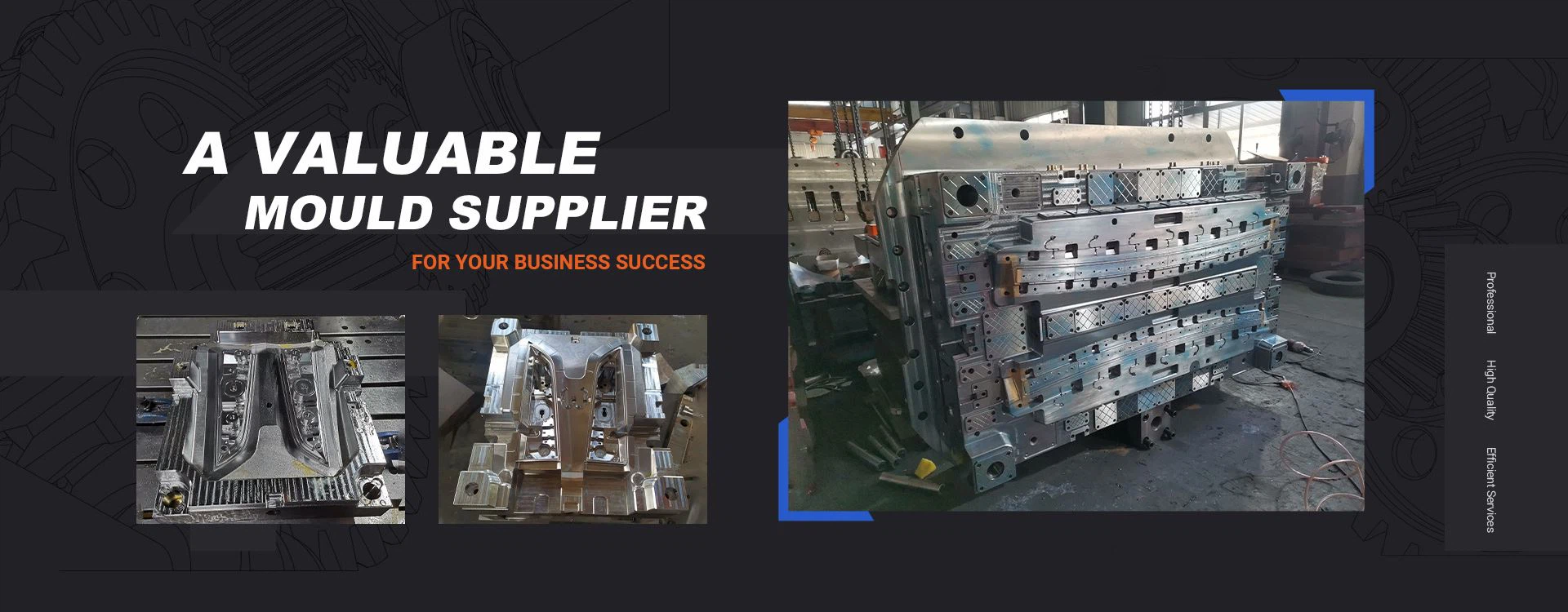
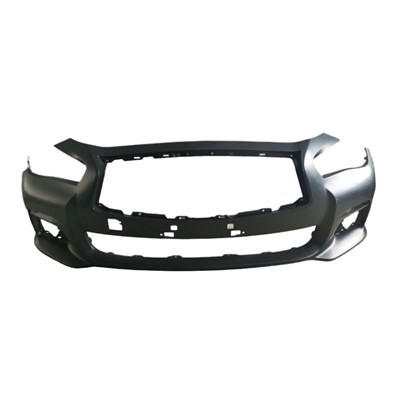
Automotive mould is plastic injection mould for a variety of automotive parts, such as body panels, interior & exterior parts. For example, car bumper, grille, headlight, tail light and much more. We are able to supply mould both for OEM and after-market. We provide different mould building solutions to meet different customers' moulding requirement. Whatever, our quality and on-time delivery helps customers win market.
Highlights of Automotive Mould
Mould for OEM Parts
OEMs demand high levels of consistency and repeatability in part production to maintain quality standards across their product lines. Injection moulds must be designed and manufactured with precision to achieve consistent results over long production runs.
Mould for After-market Parts
While maintaining quality, moulds for aftermarket auto parts must be cost-effective to ensure competitive pricing in the aftermarket sector, where price sensitivity is often higher compared to OEM markets. Aftermarket customers often require fast turn around time for tooling and production to meet demand fluctuations or capitalize on market trends. Injection moulds should be designed and manufactured with short lead time to help customers win market.
Precision and tight tolerances
Automotive parts require high precision and tight tolerances to ensure proper fit and function within the vehicle assembly. So the moulds must be with high precision quality.
Complex geometries
Many automotive parts have intricate designs and complex geometries. Injection moulds must be able to replicate these designs accurately and consistently.
Steel selection and heat treatment
The choice of mould steel is crucial to ensure compatibility with the specific plastic resin being used and to withstand the demands of automotive production environments. The steel we mostly used are P20, 718, H13, DIN1.2738, DIN1.2344, S136, S50C, NAK80, etc. Heat treatment process is very important for steel material become hardened and stress relief.


Why Choose Us
One-stop solution
With rich experience in mould industry,we provide one-stop service from product design, mould manufacturing to final production.
Customization services
We provide customization services to meet specific customer requirements, ensuring that customers receive moulds that exactly fit their needs.
Innovation
We are dedicated to improving our skills and knowledge continually, ensuring that the mould building solution we offer is always cutting edge.
24h online service
We try and respond to all concerns within 24 hours and our teams are always at your disposal in case of any emergencies.
The moulds what we mostly produce for auto parts
Bumper mould
Bumper mould is a an injection tool used for producing bumpers for cars or trucks. As the bumpers is with big size, so the moulds are with big size too. Bumper mould requires large stroke tooling machines, such as large size CNC machines, EDM, gun drilling machines, etc. Our factory owns large size tooling machines for bumper mould making. We are able to finish 15+ bumper moulds each year. Bumper moulds play a crucial role in the manufacturing process of automotive bumpers, which are essential components that protect vehicles and occupants in the event of collisions. These moulds should be designed to produce bumpers with precision, consistency, and efficiency.
Grille mould
Grille moulds, much like bumper moulds, are instrumental in the production of automotive components that serve both functional and aesthetic purposes. Car grilles often feature intricate designs and geometries to enhance airflow, cooling, and vehicle aesthetics. Grille moulds are engineered to accommodate these complex shapes, incorporating slides, lifters and core-pulling mechanisms to replicate intricate patterns and details accurately. Grille moulds incorporate specialized surface treatments, high gloss polished or textured to achieve desired aesthetics, whether it be a glossy finish, matte texture, or custom logo embossing.


Headlight mould
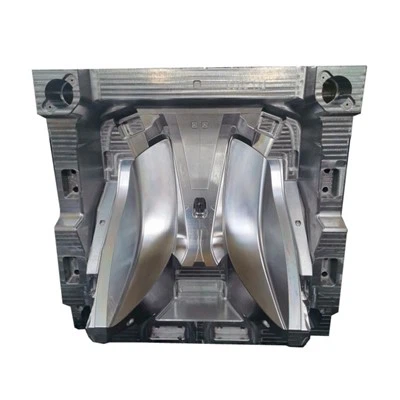
The car headlight usually contains lens, housing, bezel, reflector, light guide bar and some other parts. Plastic injection moulds for car headlights are precision-engineered tools designed to shape polycarbonate lenses and housings with utmost accuracy. These moulds incorporate advanced cooling and heating systems to ensure uniform material flow and optical clarity. With high-grade steel construction, they withstand the pressures and temperatures of injection molding while maintaining durability over extensive production cycles. Moulds feature intricate cavities and channels for precise light diffusion and pattern control. Their meticulous design and manufacturing process ensure headlights meet stringent quality and safety standards, providing vehicles with reliable illumination and aesthetic appeal.
Tail light mould
The cover of car tail light is usually made of multi-colored PMMA. Some require insert mould and some require double-color mould. Our company is with rich experience in double-color mould design and manufacturing. We supply such mould with high quality and competitive price.

1. Customer provide us 3D drawing of plastic parts. Or, customer send us original sample of plastic parts.
2. We do 3D scanning on original sample to create 3D model of plastic parts. This process is called reverse design or reverse engineering. We send 3D model of plastic parts to customer for approval.
3. After 3D model is approved by customer, we start mould design according to customer's specific requirement.
4. We send mould design file to customer for approval.
5. After mould design is approved by customer, we start mould manufacturing.
What is reverse design
Reverse design, also known as reverse engineering, is the process of analyzing and understanding the design, structure, and functionality of an existing product or object in order to recreate or modify it. It involves deconstructing and examining the product to gather information about its materials, dimensions, assembly methods, and other relevant characteristics.
Reverse design typically involves the following steps:
Data Acquisition: Gathering data about the product through various means, such as measurements, 3D scanning, X-ray imaging, or disassembly.
Analysis: Carefully studying and analyzing the collected data to understand the product's design principles, construction techniques, and functional requirements.
Documentation: Creating detailed documentation, including technical drawings, CAD models, or specifications, based on the acquired knowledge.
Recreation or Modification: Using the documented information to recreate the product with similar or improved features or to modify it for specific purposes.
Reverse design is commonly used in various fields, including engineering, manufacturing, product development, and intellectual property protection. It allows for understanding and learning from existing products, improving upon them, or creating compatible parts or alternatives when original designs or information are not available.
Design considerations are critical in the injection molding process to ensure the production of high-quality and functional plastic parts. Some important design considerations for injection molded parts in the automotive industry include:
Draft angle: Adding a draft angle to the design of the part helps in easy ejection from the mold and reduces the risk of damage or deformation.
Wall thickness: Maintaining consistent and appropriate consistency throughout the part ensures structural integrity and avoids issues like sink marks or warping.
Rib design: Incorporating ribs in the creation of the part adds strength and rigidity without significantly increasing the weight or material usage.
Gate location: Proper gate placement, where the molten plastic enters the mold cavity, ensures even flow, and minimizes cosmetic defects like gate marks or weld lines.
Material selection: Choosing a suitable plastic material based on the specific requirements of the part, such as mechanical strength, chemical resistance, and temperature stability, is crucial for optimal performance.

Raw Materials Used in Injection Molding for auto parts
Manufacturers can use a wide range of plastic raw materials, including thermoplastics, thermosets, and elastomers:
Polypropylene (PP)
PP is a versatile thermoplastic material commonly used in injection molding due to its low cost, high stiffness, and excellent chemical resistance.
Acrylonitrile-butadiene-styrene (ABS)
Manufacturers commonly use ABS, a thermoplastic material, in injection molding due to its toughness, impact resistance, and ease of molding.
Polycarbonate (PC)
PC is a thermoplastic material commonly used in injection molding due to its high strength, impact resistance, and transparency.
Moldflow analysis, also known as mold filling analysis or injection molding simulation, is a valuable tool used in mold design to predict and optimize the filling, packing, and cooling phases of the injection molding process.
Early Design Validation: Moldflow analysis allows engineers to identify potential design issues and optimize the mold geometry before manufacturing begins, saving time and cost.
Optimization of Process Parameters: By simulating different scenarios, engineers can optimize injection parameters (such as gate location, injection pressure, and cooling time) to achieve uniform filling, minimize defects, and reduce cycle time.
Quality Improvement: Moldflow analysis helps predict and prevent common molding defects such as air traps, short shots, sink marks, and warpage, leading to higher-quality parts.
Cost Reduction: By optimizing the mold design and process parameters, manufacturers can reduce material waste, minimize production downtime, and improve overall efficiency, resulting in cost savings.
Predictive Maintenance: Continuous monitoring and analysis of moldflow data can help identify potential issues in advance, allowing for proactive maintenance and avoiding costly mold failures or production delays.
How Moldflow Analysis Works
Geometry Import: The first step involves importing the CAD geometry of the part and the mold into the simulation software.
Material Properties: Define the material properties such as melt temperature, viscosity, shrinkage, and thermal conductivity.
Mesh Generation: The software divides the geometry into small elements (mesh) to solve mathematical equations.
Boundary Conditions: Specify the injection molding process parameters such as injection pressure, injection speed, mold temperature, and cooling time.
Simulation: The software uses mathematical models (such as finite element analysis) to simulate the flow of molten plastic through the mold cavity, predicting how it fills the mold, packs out, and cools.
Analysis: The simulation results provide insights into potential issues like air traps, weld lines, shrinkage, warpage, and residual stresses.
Optimization: Based on the analysis, engineers can make design adjustments to optimize the mold and process parameters for better part quality and production efficiency.

Several injection parameters play crucial roles in the injection molding process for automotive parts. Here are some key parameters to consider:
Injection Speed: The speed at which molten plastic is injected into the mold cavity. It affects filling time, part quality, and surface finish. High injection speeds can help fill thin sections quickly but may lead to higher shear rates and potential defects.
Injection Pressure: The pressure applied to the molten plastic during injection. It influences material flow, part packing, and the ability to fill intricate features. Proper pressure control is essential to prevent short shots or incomplete filling.
Injection Temperature: The temperature of the molten plastic as it enters the mold cavity. It affects material viscosity, flow behavior, and part quality. Maintaining consistent temperature control is critical for achieving uniform filling and minimizing defects.
Hold Pressure: The pressure applied to the material after injection to pack and compress it within the mold cavity. It helps improve part density, reduce shrinkage, and minimize sink marks. Optimal hold pressure ensures proper part dimensions and mechanical properties.
Hold Time: The duration for which hold pressure is maintained after injection. It allows the material to cool and solidify fully, reducing the risk of warpage or deformation. Adequate hold time is necessary to ensure part integrity and dimensional stability.
Cooling Time: The time allotted for the molded part to cool and solidify before ejection from the mold. Proper cooling time prevents premature ejection and ensures that the part retains its shape and dimensional accuracy. Longer cooling times may be required for thicker sections or heat-sensitive materials.
Screw Speed: The rotational speed of the screw within the injection molding machine barrel. It determines the rate of plasticization and affects melt homogeneity and residence time. Adjusting screw speed can help optimize melt quality and processing efficiency.
Back Pressure: The pressure applied to the screw during the plasticization process. It helps maintain consistent melt quality, prevent slippage, and ensure proper mixing of additives or colorants. Proper back pressure settings are essential for achieving uniform part properties.
Mold Temperature: The temperature of the mold cavity and core during the molding process. It influences material crystallization, shrinkage, and part release. Controlling mold temperature is critical for achieving desired part properties and surface finish.
Injection Rate: The rate at which the injection screw advances during the injection phase. It affects material flow velocity, pressure build-up, and shear stress. Adjusting the injection rate can help optimize filling behavior and minimize flow-related defects.
By carefully adjusting and optimizing these injection parameters based on the specific requirements of the automotive parts being molded, manufacturers can achieve consistent quality and performance in their injection molding processes.
Injection Moulding Applications For Automotive Parts
From interior to exterior, under-the-hood to lighting, automotive injection moulding plays a pivotal role in shaping the modern vehicle.
Interior Components
Manufacturers also produce many automotive interior parts using plastic injection moulding. They include instrumentation components, interior surfaces, dashboard faceplates, door handles, glove compartments, air vents, and more. In addition, they also use injection moulding to produce decorative plastic elements.
Under-the-Hood Components
Over the past two decades or so, manufacturers have transitioned to plastics for many under-the-hood components that were previously made from metal.
Exterior Components
Injection moulding is an established process for many exterior automotive components, including fenders, grilles, bumpers, door panels, floor rails, light housings, and more. Splash guards are a fine example for demonstrating the durability of injection molded parts. In addition, the components, which protect the car from road debris and minimize splashing, are often made from plastic or rubber or other durable and flexible materials.
The Types of Hot Runner System What We Used
Valve Gate Hot Runners: Valve gate hot runners are widely used in automotive molds due to their superior control over the flow of molten plastic. Each nozzle in the hot runner system has a valve pin that opens and closes to control the flow of plastic into the mold cavity. This allows for precise gating, reduced shear stress, and improved part quality. Valve gate hot runners are particularly useful for molding complex automotive parts with tight dimensional tolerances.
Sequential Valve Gate Hot Runners: Sequential valve gate hot runners are an advanced variation of the valve gate system. They allow for sequential gating, where multiple gates are opened and closed in a specific sequence to fill different sections of the mold cavity. This enables more precise control over filling and packing, reducing the risk of flow marks or weld lines. Sequential valve gate hot runners are often used in automotive molds for parts with varied wall thickness or multiple gating points.
Open Type Hot Runners: Open type hot runners are a simpler and cost-effective option for automotive molds. In this system, the molten plastic flows directly from the machine nozzle into a heated sprue bushing, which then distributes the material to the mold cavities. Open type systems are relatively easy to install and maintain.