

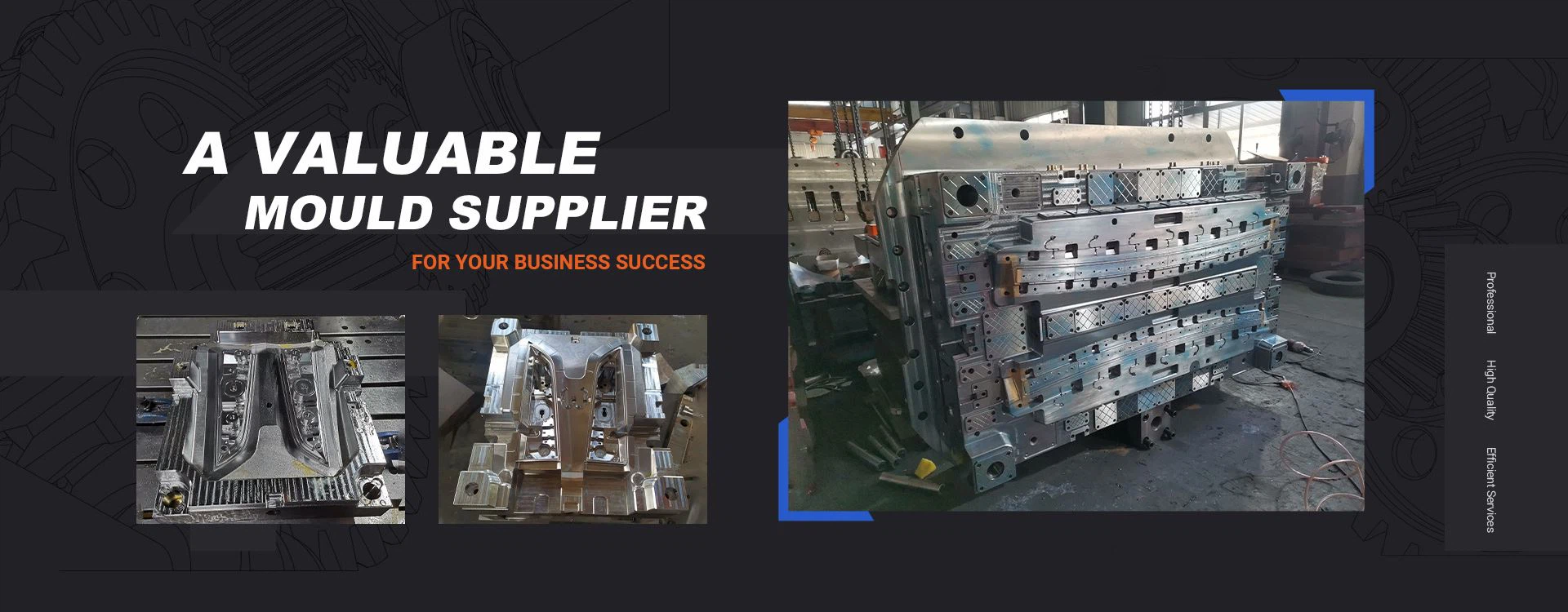


Fog Light Mould
Pinheng Mould: Your professional Fog Light Mould Manufacturer
20+ Years Experience
With over 20+ years of experience in the industry, we have perfected our techniques and use the latest technologies to deliver exceptional results.
Advanced Equipment
Our factory owns advanced equipment for mould making, including high speed CNC machines, EDM, drillers, spotting machines, injection molding machines, etc.
Professional R&D Team
Our professional designers will carefully design the mold, including mold flow analysis and precise calculations, to ensure that each mold has high precision.
Double-Shot Injection Moulding Technology
We are proud of our capability for double shot mould manufacturing and injection moulding production. Our factory owns 3 double shot injection moulding machines.
car
Fog Lights: something that you need to know
Automotive fog lights are generally turned on when visibility is low, and the penetrating power of light must be particularly strong. Turning on fog lights is to allow others to see the position of your vehicle when visibility is low. The current main light sources include gas bulb light sources and LED light sources. The future development direction is laser fog lights. In order to maintain strong penetration of the light source, the power of the light source is higher, so the heat resistance level of the parts is higher. The fog lamp reflector bowl is usually made of High temperature resistant materials, and the LED light source is usually made of aluminum alloy die-casting to enhance heat dissipation.
Fog lamp parts usually require high heat resistance, so the selection of the mould steel and the processing parameters of the reflective pattern are extremely important. Fog lamp housing usually uses PBT+30GF materials with higher heat resistance, so the choice of gate location is very important.
Commonly used materials for fog lamp parts
|
HOUSING |
LENS |
REFLECTOR |
BEZEL |
|
PC+ABS |
PC |
PC |
PC |
|
PBT+GF |
PC+ABS |
PBT |
|
|
PBT |
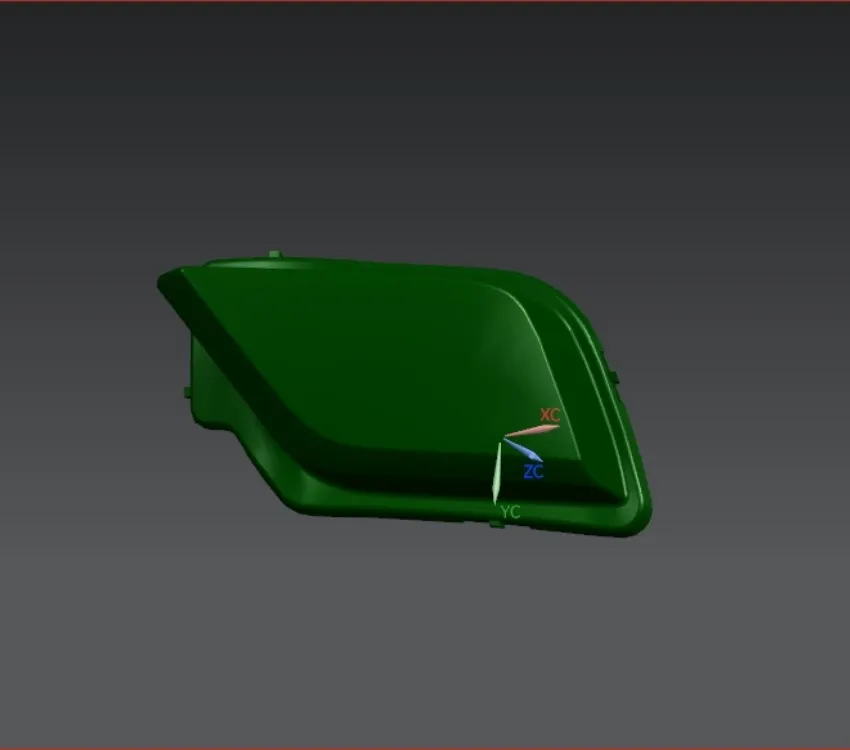
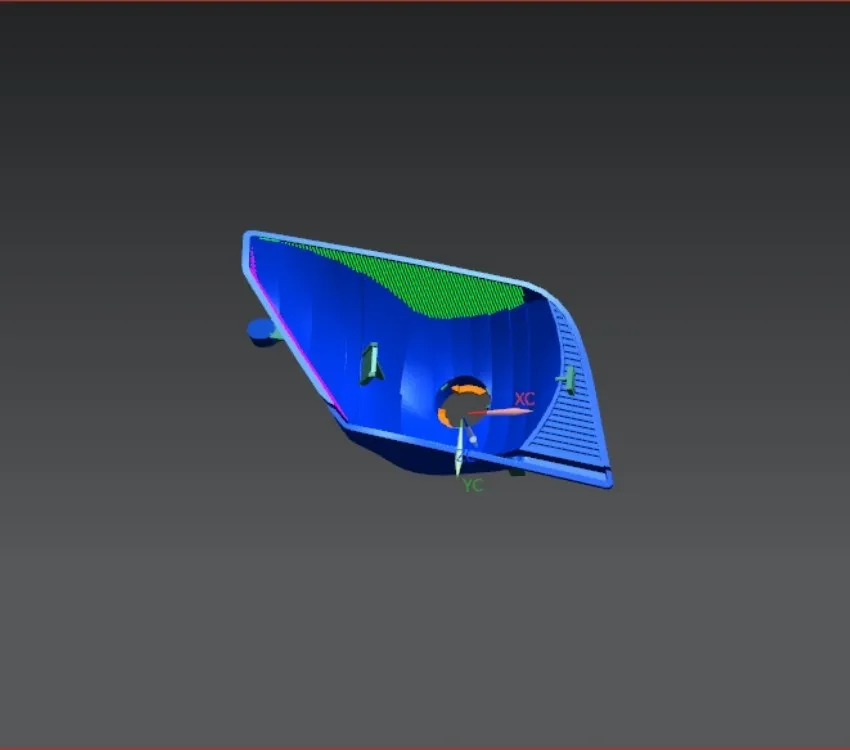

The Features of Fog Light Mould as below
Lens mould:
The material of LENS is usually made of PC material. The side surface of the product has lace pattern, and the product surface requires hard coating.
It usually requires mirror polishing on mould surface, and the mould uses side gates to injection. The wall thickness must be optimized before mould machining to avoid air trapping. 5-axis CNC machining for lace patterns around the product edge.
Housing mould:
The material of fog light housing is usually made of PBT+GF or PC+ABS. It has high requirement on air tightness and temperature resistance. The dimming shaft hole of the product is usually a compound angle inclined hole.
The parting surface of fog lamp housing mold is complex. Hot runner with manifold is usually used. Before mould making, we will take clear countermeasures to determine the adverse effects of glass fiber on the air tightness of the product. The mould structure is complex, and the design of the core-pulling mechanism for the oblique light-adjusting shaft hole is a key consideration.
Reflector mould:
The reflector is usually made of high temperature resistant materials, and the product will be plated with chrom.
The fog lamp reflector mould has a complex parting surface and uses a hot runner with a manifold to injection from the center of the product. The processing of reflective patterns requires a 30,000-rpm high-speed machining center to be processed and formed in a fixed direction at one time, and manual polishing is strictly prohibited. Mould cooling system design is key. The sealing ring should be a high-temperature resistant sealing ring, and there should be heat insulation devices around the mould.
Bezel mould:
The product material must be able to withstand high temperatures, and it usually requires plating. There can only be one parting line on the product, and it should has a smooth appearance without flow marks, fogging or other poor appearance.
The bezel mould usually uses hot runner with a manifold. There are sliders around the mould to pull the core, and the sealing ring of the mould cooling system usually uses a high-temperature resistant sealing ring. It requires high precision for machining to assure product does not have any flashes. As the product needs to be plated, It is necessary to avoid slight flashing on the edges, which will have a negative impact on the appearance.
Contact us today and discover the perfect solution for your automotive fog light mould requirements!
Pinheng Mould- Mould Design preocess
Part Analysis: Start by analyzing the plastic part that you want to produce with the fog lamp. Understand its geometry, size, wall thickness, draft angles, undercuts, and any other relevant features. Identify any potential challenges or moldability design considerations.
Mold Type Selection: Select the appropriate mold type based on part complexity, production volume, and cost considerations. Common mold types include two-plate molds, three-plate molds, hot runner molds, and series molds. Each type has its advantages and limitations.
Parting Line and Gate Design: Determine the parting line, which is the boundary between the two halves of the mold. Select the gate location, which is where the molten plastic enters the mold cavity. Consider factors such as part aesthetics, filling characteristics, and mold accessibility.
Mold Cavity Layout: Determine the number of cavities required in the mold based on the desired production volume. Optimize the layout of the cavities within the mold to maximize productivity and minimize material waste.
Cooling System Design: We will design an efficient cooling system to control the temperature of the mold during the injection molding process. Consider factors such as cooling channel location, size, and uniformity.
Ejector System Design: Determine the ejector system that removes the molded part from the mold. This can include ejector pins, ejector sleeves, lifters, or stripper plates. Ensure the ejection system does not interfere with part geometry and allows for smooth ejection.
Venting and Air Trapping Considerations: Incorporate proper venting to allow for the removal of air and gases during the injection molding process.
Mold Material Selection: Select the appropriate materials for the mold base, cavity, core, and other mold components based on factors such as production volume, fog lamp part material, and expected mold life.
Draft Angles and Surface Finish: Incorporate draft angles into the mold design to facilitate easy demolding of the part. Consider the desired surface finish of the part and incorporate texturing or polishing requirements into the mold design.

Quality control: multiple simulation projects
Simulation plays a vital role in the design and optimization of plastic injection molds. When designing fog lamps, our engineers will conduct multi-faceted simulations to predict and analyze the behavior of molten plastic during the injection molding process, identify potential problems, and optimize the mold design before manufacturing. We have multiple simulation projects, including optical design, dynamic simulation of road lighting, sunburn simulation, thermal simulation, product structure design, and vibration mechanics simulation.

FAQ
Q: What is the purpose of fog lights?
A: A fog light, as the name suggests, is designed for foggy or other low-visibility conditions, such as smoke or heavy dust. They are specifically designed to penetrate in these conditions, typically placed lower on bumpers than headlights to create a clearer view of the road ahead.
Q: Where is the fog light on a car?
A: If your vehicle does have front fog lights, these are usually found below the headlights, and illuminate the road directly in front of you. Rear fog lights are shine at the back, alerting the vehicles behind you of your presence. At least one rear fog light will be found on vehicles, as it is a legal requirement.
Q: Are front fog lights important?
A: The Highway Code also states that you must switch both front and rear fog lights off when visibility improves. Front fog lights can help you to see the road ahead when visibility is poor. Just as importantly, they make it easier for traffic coming the other way to spot you.
Q: Are yellow fog lights better?
A: Yellow lights are the best among fog light colors because they hit your retina in a way that enables you to focus on the road. Staring constantly at white light can frustrate the eye, and darker colors like blue and green have limited wavelength.
Q: Are LEDs good for fog lights?
A: LED fog lights should be used independently during times of snowy or foggy weather. The opposite is true as well. LED fog lights should not be turned on when there is no fog or snow. They are designed to be super bright to help the driver see better in the adverse weather conditions.
Hot Tags: fog light mould, China fog light mould, Auto Light Mould, toyota bumper mould, Light Lens Mould, car dashboard mould, plastic injection dish mould, fog lamp mould
Previous
Headlight MouldYou Might Also Like


Send Inquiry