



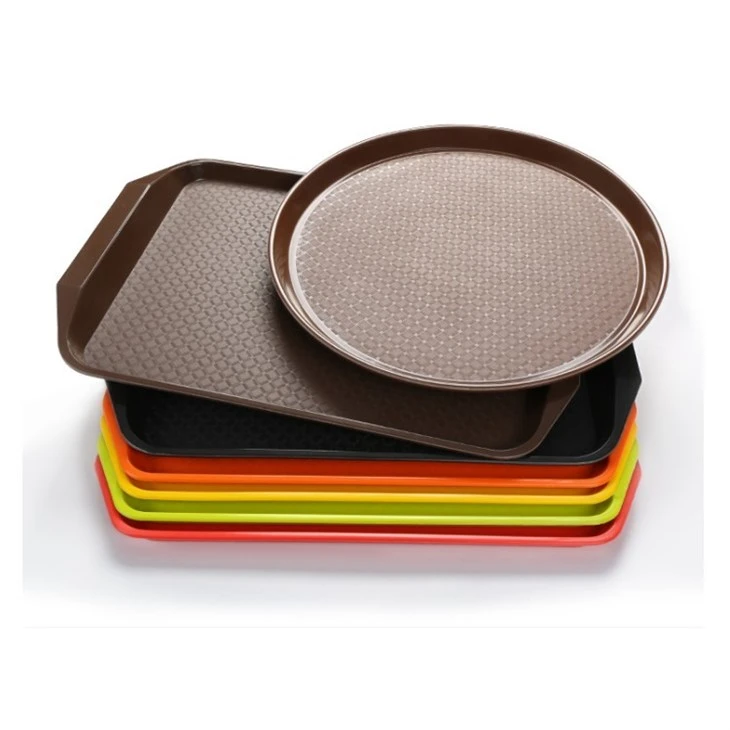

Plastic Food Tray Mould
Products Description
|
Mould name |
Plastic food tray mould |
|
Plastic resin |
PP |
|
Numbers of mould cavity |
Single cavity |
|
Gate and runner |
Hot runner or cold runner |
|
Core and Cavity steel |
P20/718/H13/2344/S136 steel |
|
Mould base steel |
1045 steel |
|
Surface finish |
Polishing |
|
Injection machine specification |
300 Tons |
|
Mould manufacturing time |
50 days for T1 mould trial |
|
Cycle time |
45-50s |
|
Mould life |
≥ 300,000 shots |


When make a plastic food tray mould, what is wall thickness should we take for plastic trays?
The wall thickness of a plastic food tray is an important factor to consider in the design and manufacturing process, as it can affect the performance and durability of the finished product. Here are some considerations for determining the appropriate wall thickness for a plastic food tray:
- Stiffness and rigidity: The wall thickness of the plastic food tray should be sufficient to provide the necessary stiffness and rigidity required for the intended use. If the tray is too thin, it may not be able to support the weight of the food or other contents.
- Material selection: The type of material used for the plastic food tray will also impact the appropriate wall thickness. Different materials have different strengths and properties that will affect the required thickness.
- Moldability: The wall thickness should be consistent throughout the tray to ensure uniform cooling and avoid shrinkage or warping during the manufacturing process.
- Cost considerations: Thicker walls require more material, which can increase the cost of production. Therefore, the wall thickness should be balanced with cost considerations to ensure an optimal balance between performance and affordability.
- Regulatory requirements: The wall thickness may be subject to regulatory requirements related to food safety and packaging standards. It is important to comply with these standards to ensure the safety and quality of the finished product.
Overall, the appropriate wall thickness for a plastic food tray will depend on several factors, including the intended use, material selection, manufacturing process, and regulatory requirements. It is important to consult with our team to determine the optimal wall thickness for your specific needs.
Which demoulding way would you like to use for your plastic food tray mould?
The demoulding structure is an important aspect to consider when designing a mould for plastic food trays. There are several common demoulding structures used in plastic food tray moulds:
- Automatic demoulding: This structure uses a mechanical system to automatically demould the product from the mould. It is typically used for high-volume production runs.
- Air demoulding: This structure uses compressed air to blow the product off the mould. It is commonly used for thin-walled or complex-shaped trays.
- Hydraulic demoulding: This structure uses hydraulic pressure to push the product out of the mould. It is used for large and heavy-duty plastic food trays.
- Stripper plate demoulding: This structure has a separate stripper plate that removes the product from the mould. It is often used for deep-drawn or multi-cavity moulds.
- Manual demoulding: This structure requires manual intervention to remove the product from the mould. It is typically used for lower volume production runs.
The choice of demoulding structure will depend on factors such as the size, shape, and complexity of the product, as well as the production volume and equipment available. It is important to ensure that the selected demoulding structure is reliable, efficient, and safe for use in producing food trays.
If you are ready to purchase a mould, contact us today to get a quotation.
Hot Tags: plastic food tray mould, China plastic food tray mould, front light mould, plastic desk mould, volkswagen bumper mould, door inside handle mould, light reflector mould, dog cage mould
Previous
Plastic Basket MouldYou Might Also Like


Send Inquiry